IELTS Writing Task 1 (Academic + General) Complete Guide 2026
TL;DR
- This blog targets IELTS candidates preparing for both IELTS academic writing task 1 and IELTS general writing task 1, helping them understand exam format, question types, structure, and scoring strategies to achieve a higher band score in the IELTS Writing test.
- The blog provides a complete breakdown of IELTS writing task 1, including exam format, time management, word limit, and differences between academic and general task types, making it easier for students to understand what examiners expect.
- It explains IELTS academic writing task 1 in depth, covering all question types such as line graphs, bar charts, pie charts, tables, process diagrams, and maps, along with specific strategies to improve task achievement and coherence.
- The blog also covers IELTS general writing task 1 in detail, including types of letters (formal, semi-formal, informal), structure, tone rules, and common mistakes that students make while writing letters in the exam.
- It includes practical learning tools such as band 5 to band 9 upgrade techniques, sample answers, mistake analysis, and FAQs, making it a complete IELTS writing task 1 guide for improving vocabulary, grammar, and overall writing performance.
Related Blogs
- IELTS Test Cost 2026: Australia Test, Coaching & Preparation
- IELTS Listening Practice : Complete Training Guide for Band 9
- How to improve IELTS Writing Test preparation
Introduction
IELTS Writing Task 1 is one of the most important components of the IELTS exam, designed to assess a candidate’s ability to present and summarise visual or textual information in a clear and structured way. In this task, test takers are required to describe data, trends, processes, maps, or write letters depending on the test type. A strong performance in IELTS writing task 1 plays a crucial role in achieving a high overall band score.
There are two versions of this task: IELTS academic writing task 1 and IELTS general writing task 1. In the academic version, candidates are asked to analyse and report visual data such as graphs, charts, tables, and diagrams. In the general version, candidates are required to write a letter based on a given situation, which may be formal, semi-formal, or informal. Although both formats assess writing ability, the approach, tone, and structure differ significantly.
Understanding IELTS writing task 1 is essential because it directly impacts your writing band score, especially in the areas of task achievement, coherence, vocabulary, and grammar. Many candidates struggle with this task due to poor structure, lack of overview, and difficulty in paraphrasing information accurately. As a result, even students with good English often fail to achieve their target band score.
A clear understanding of IELTS writing task 1 academic and IELTS general writing task 1 requirements helps candidates avoid common mistakes and improve their overall performance in the exam.
IELTS Writing Task 1 Overview
IELTS task 1 writing is a compulsory section of the IELTS Writing test that assesses a candidate’s ability to present information clearly, accurately, and logically within a limited time. In this task, candidates are expected to write at least 150 words based on given input such as visual data or a situation prompt, depending on the test module.
The recommended time to complete IELTS Writing Task 1 is around 20 minutes. Although there is no strict time limit per task, managing time effectively is essential because Task 1 contributes significantly to the overall writing band score. Candidates are advised to complete Task 1 first and leave sufficient time for IELTS Writing Task 2, which carries more weight in scoring.
There are two versions of this task. In IELTS writing task 1 academic, candidates are given visual information such as line graphs, bar charts, pie charts, tables, maps, or process diagrams. The task requires summarising key trends, comparisons, and important features without adding personal opinion. In contrast, IELTS general writing task 1 requires candidates to write a letter based on a given situation. The letter may be formal, semi-formal, or informal depending on the context, and it assesses the ability to communicate effectively in everyday situations.
Understanding the format of IELTS task 1 writing is essential for achieving a high band score, as it directly evaluates task response, coherence, vocabulary, and grammatical accuracy.
IELTS Academic Writing Task 1 Explained
IELTS academic writing task 1 is designed to evaluate how effectively a candidate can describe, summarise, and report visual information in a clear and structured format. Unlike opinion-based writing, this task focuses entirely on factual description, data interpretation, and logical presentation of information. Candidates must avoid personal opinions and instead focus on highlighting key features, trends, and comparisons.
Question Types in Academic Task 1
In IELTS writing task 1 academic, candidates may be given different types of visual information. Each question type requires a slightly different approach, but the core skill remains the same: identifying key trends and presenting them clearly.
Common question types include:
- Line graph – shows changes over time and requires trend analysis
- Bar chart – compares categories or groups of data
- Pie chart – presents proportions or percentages of a whole
- Table – displays numerical data in rows and columns for comparison
- Process diagram – explains stages of a process or cycle in sequence
- Map – shows changes in a place over time or compares two locations
Each of these question types tests the ability to select relevant information rather than describe everything.
What Examiner Expects in IELTS Academic Writing Task 1 ?
In IELTS academic writing task 1, examiners assess how well candidates can interpret and present visual data using appropriate academic language and structure. The key assessment areas include:
Overview Writing:
A clear summary of the main trends or overall picture is essential. This is one of the most important elements for achieving a higher band score.
Data Comparison:
Candidates must compare relevant data points rather than listing information separately. Effective comparison shows logical thinking and coherence.
No Opinion Writing:
Personal opinions, reasons, or assumptions must not be included. The task is purely descriptive and data-based.
Accurate Trend Description:
Candidates are expected to describe increases, decreases, fluctuations, and stability using precise vocabulary and correct grammar.
Mastering these expectations in IELTS writing task 1 academic is essential for achieving a Band 7 or higher, as performance is heavily based on clarity, accuracy, and organization.
Strategy for Each Question Type (IELTS Writing Task 1 Academic)
In IELTS academic writing task 1, success does not depend only on grammar or vocabulary, but on how effectively you interpret and organise visual information. Each question type requires a different strategy, and applying the correct approach helps improve coherence, task achievement, and overall band score.
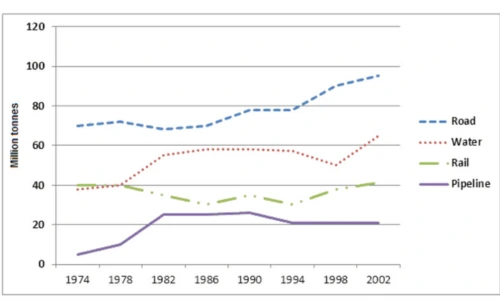
Line Graph → Trend Grouping Method
For line graphs in IELTS writing task 1 academic, the key is to avoid describing each point separately. Instead, group data based on similar trends such as upward movement, downward movement, or stability. This helps create a clear comparison between major patterns over time. Focus on overall changes rather than minor fluctuations.
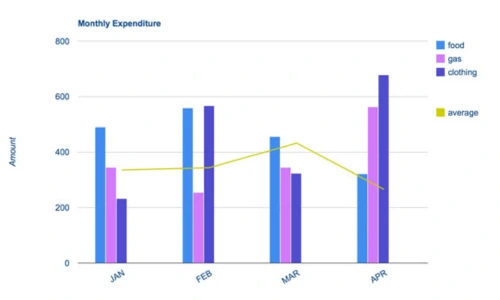
Bar Chart → Comparison Prioritisation
In bar chart questions, the examiner expects clear comparisons between categories. The best strategy is to prioritise the highest and lowest values first, then group similar data together. This approach ensures logical flow and prevents simple listing of figures, which can lower your score in IELTS academic writing task 1.
Pie Chart → Percentage Ranking System
For pie charts, the most effective strategy is ranking segments from largest to smallest. This allows you to highlight dominant proportions and significant differences. Avoid describing every segment equally; instead, focus on major contrasts and group smaller categories when necessary to maintain clarity.
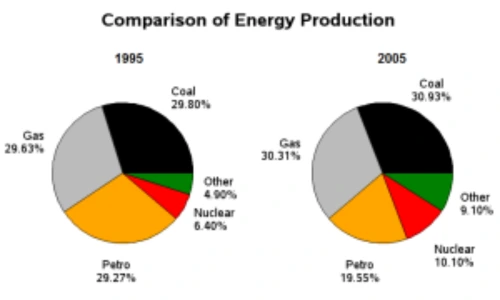
Table → Data Selection Filtering
Tables often contain large amounts of information. In IELTS writing task 1 academic, you should not describe everything. Instead, filter the most important data points, such as highest, lowest, and notable comparisons. Grouping related figures helps improve readability and coherence.
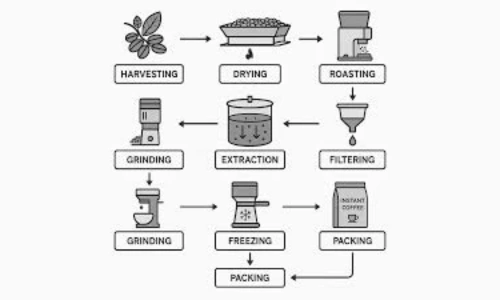
Process → Step Sequencing
For process diagrams, accuracy in sequence is critical. Describe each stage in order using clear linking words such as “first,” “next,” “then,” and “finally.” Passive voice is commonly used here because the focus is on the process, not the person performing it. Maintaining logical flow is essential for high scoring responses.
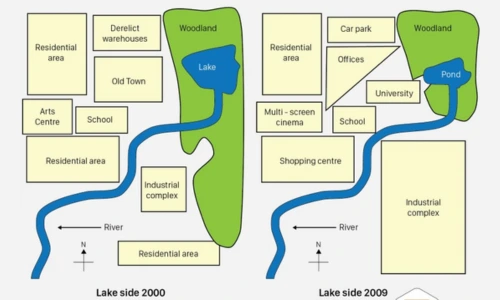
Map → Spatial Vocabulary System
Map questions require strong spatial language rather than numerical description. Use directional vocabulary such as “north,” “south,” “adjacent to,” “next to,” and “opposite.” Compare changes over time or differences between two maps by focusing on developments, expansions, or replacements.
IELTS General Writing Task 1 Explained
IELTS general writing task 1 focuses on assessing a candidate’s ability to communicate effectively in everyday and practical situations through letter writing. Unlike IELTS academic writing task 1, which is data-based, this task evaluates how well you can adjust tone, structure, and language according to the given situation. The response must be at least 150 words and written in a clear, logical format.
3.1 Types of Letters in IELTS General Writing Task 1
In IELTS general writing task 1, candidates are required to write different types of letters depending on the situation provided in the question. Understanding the tone and purpose of each type is essential.
Formal Letter:
Used when writing to someone you do not know personally, such as a company manager, government office, or service provider. The language must be polite, professional, and structured.
Semi-Formal Letter:
Used when writing to someone you know in a professional or respectful context, such as a landlord, colleague, or teacher. The tone is balanced between formal and friendly.
Informal Letter:
Used when writing to friends or family members. The language is relaxed, conversational, and may include personal expressions.
3.2 Structure of IELTS General Writing Task 1
A well-structured response is essential in IELTS task 1 writing, as it directly affects coherence and task achievement scores.
Opening Greeting:
Begin with an appropriate salutation depending on the letter type (e.g., Dear Sir/Madam or Dear John).
Purpose Statement:
Clearly state the reason for writing in the first paragraph. This helps the examiner understand the intent of the letter immediately.
Body Paragraphs:
Develop the main ideas in two paragraphs, providing relevant details, explanations, or requests based on the question prompt.
Closing Statement:
End the letter appropriately with a closing sentence and sign-off that matches the tone of the letter.
3.3 Tone Rules (Very Important in IELTS General Writing Task 1)
Tone plays a critical role in IELTS general writing task 1, as incorrect tone usage can significantly reduce your band score.
Formal vs Informal Language Usage:
Formal letters require polite and structured language, while informal letters allow contractions, phrasal expressions, and a conversational tone.
Common Mistakes Students Make:
- Using informal language in formal letters
- Overly complex vocabulary in informal letters
- Incorrect greetings or sign-offs
- Mixing tones within the same letter
- Lack of clarity in purpose statement
Mastering tone control is essential for performing well in IELTS task 1 writing, as examiners carefully assess whether the writing style matches the context of the question.
IELTS Writing Task 1: Academic vs General Comparison
Understanding the difference between IELTS academic writing task 1 and IELTS general writing task 1 is essential for selecting the correct approach, tone, and structure in the exam. Many candidates lose marks because they apply the wrong strategy to the wrong task type, which directly affects task achievement and coherence scores.
Comparison Table
| Feature | Academic Writing Task 1 | General Writing Task 1 |
| Format | Graphs, charts, tables, maps, process diagrams | Letters |
| Tone | Formal and objective | Formal, semi-formal, or informal |
| Purpose | Data description and analysis | Communication for a real-life situation |
| Vocabulary | Analytical and data-focused language | Context-based and situation-specific language |
Explanation of Key Differences
In IELTS academic writing task 1, candidates are required to describe visual information such as graphs, charts, tables, maps, or process diagrams. The focus is entirely on summarising data, identifying key trends, and making comparisons without adding personal opinions. The tone must remain formal and objective throughout, and the language used should be analytical, focusing on accuracy and clarity.
In contrast, IELTS general writing task 1 focuses on letter writing. Candidates must respond to a given situation, which may involve requesting information, explaining a problem, or providing details. The tone can vary depending on the context of the letter, ranging from formal to informal. Unlike the academic version, this task requires communication skills rather than data interpretation.
Another major difference lies in vocabulary usage. IELTS writing task 1 academic requires precise, data-driven language to describe trends and changes, while IELTS general writing task 1 uses more practical and situational vocabulary based on everyday communication.
Understanding these differences is crucial for choosing the correct writing strategy and achieving a high band score in the IELTS task 1 writing section.
IELTS Task 1 Writing Structure (Band 7–9 Formula)
A clear and well-organised structure is one of the most important factors in achieving a high band score in IELTS writing task 1. Whether you are attempting IELTS academic writing task 1 or IELTS general writing task 1, following a consistent structure ensures better coherence, task achievement, and readability. Below are the proven Band 7–9 structures for both formats.
5.1 Academic Writing Task 1 Structure
In IELTS writing task 1 academic, your response must focus on describing visual data logically and objectively. A strong structure helps you select and present key information effectively.
Introduction (Paraphrase):
Rewrite the question statement in your own words without changing the meaning. This shows your ability to paraphrase effectively.
Overview (MOST IMPORTANT):
Summarise the main trends, patterns, or significant features without including specific data. This is one of the most heavily weighted sections for higher band scores.
Body Paragraph 1:
Describe the first set of key details or trends. Group similar information and make comparisons where relevant.
Body Paragraph 2:
Present the remaining important data, continuing logical comparisons and highlighting key changes or differences.
This structure is commonly seen in high-scoring IELTS task 1 writing samples and is essential for achieving Band 7 or above.
5.2 General Writing Task 1 Structure
In IELTS general writing task 1, the structure is based on effective communication through letter writing. The tone and format must match the situation given in the question.
Greeting:
Start with an appropriate salutation such as “Dear Sir/Madam” for formal letters or “Dear John” for informal letters.
Purpose:
Clearly state the reason for writing in the opening paragraph. This helps set the context of the letter immediately.
Body Paragraph 1:
Explain the first main point in detail, depending on the task (request, complaint, invitation, etc.).
Body Paragraph 2:
Provide additional supporting details, explanations, or necessary information to complete the message.
Closing:
End the letter appropriately with a suitable closing statement and sign-off based on the tone.
IELTS Writing Task 1 Samples (Band 7–9 Examples)
Practicing high-quality IELTS task 1 writing samples is one of the most effective ways to understand examiner expectations and improve your own writing performance. Below are sample responses for both IELTS academic writing task 1 and IELTS general writing task 1 formats. These examples demonstrate structure, vocabulary, and coherence required for Band 7–9 level.
6.1 Line Graph Sample Answer
The line graph illustrates changes in the number of international students enrolling in universities in three different countries between 2000 and 2020.
Overall, all three countries experienced an upward trend over the period, although the rate of growth varied significantly. Country A showed the most dramatic increase, while Country C remained relatively stable in comparison.
In 2000, Country A had the lowest number of international students. However, it experienced a steady rise throughout the period, reaching its peak in 2020. Country B also showed consistent growth, although at a slower pace. In contrast, Country C saw only minor fluctuations, with a slight increase towards the end of the period.
6.2 Bar Chart Sample Answer
The bar chart compares the average weekly spending of households on different categories such as food, transport, entertainment, and housing in 2025.
Overall, housing accounted for the highest expenditure, while entertainment had the lowest spending across all categories.
Households spent the largest proportion of their income on housing, significantly higher than other categories. Food and transport followed, with relatively similar spending levels. In contrast, entertainment remained the least prioritized category, showing a clear difference compared to essential expenses.
6.3 Process Diagram Sample Answer
The diagram shows the process of making cement and how it is used in the production of concrete.
Overall, cement production involves several stages, beginning with raw material extraction and ending with packaging, while concrete is produced by mixing cement with other materials.
First, limestone and clay are crushed and heated in a kiln. The resulting product is then ground into a fine powder, which becomes cement. Finally, cement is packed and transported for use. To produce concrete, cement is mixed with water, sand, and gravel in a fixed ratio, forming a strong construction material.
6.4 General Writing Task 1 Sample Letter
Task: You recently stayed at a hotel and were dissatisfied with the service. Write a letter to the manager.
Dear Sir/Madam,
I am writing to express my dissatisfaction with the service I received during my recent stay at your hotel between 10th and 12th March.
Firstly, the room allocated to me was not properly cleaned upon arrival, and several facilities were not in working condition. Additionally, the staff response to my complaints was slow and unhelpful, which made my stay uncomfortable.
I would appreciate it if you could look into this matter and ensure that such issues do not occur in the future. I would also like to request partial compensation for the inconvenience caused during my stay.
Yours faithfully,
[Your Name]
Band 5 to Band 9 Upgrade System (IELTS Writing Task 1 Improvement Guide)
Improving from Band 5 to Band 9 in IELTS writing task 1 requires more than basic grammar knowledge. It depends on how effectively you upgrade vocabulary, sentence structure, and overall reporting style. This section focuses on practical transformation techniques used in high-scoring IELTS academic writing task 1 responses.
7.1 Vocabulary Upgrade Table
One of the fastest ways to improve your IELTS writing task 1 academic score is by replacing basic vocabulary with more precise academic expressions. Examiners look for variety, accuracy, and natural usage of language.
| Basic Expression (Band 5–6) | Advanced Expression (Band 7–9) |
| increase a lot | rose significantly |
| go up | showed a steady increase |
| go down | declined steadily |
| a lot of | a considerable number of |
| big difference | a significant difference |
| stay the same | remained stable |
| very important | highly significant |
Using upgraded vocabulary consistently in IELTS task 1 writing helps demonstrate lexical resource accuracy and improves overall band performance.
7.2 Grammar Transformation (Simple to Complex)
Grammar plays a key role in determining your IELTS writing score. Moving from simple sentences to complex structures is essential for achieving Band 7 or higher.
Simple to Complex Sentence Conversion:
- Simple: Sales increased in 2010.
- Complex: There was a significant increase in sales in 2010 compared to the previous year.
Adding Relative Clauses:
- Simple: The chart shows data.
- Complex: The chart, which illustrates changes over a ten-year period, shows a steady upward trend.
Passive Voice Usage (Important for Process Writing in IELTS Academic Writing Task 1):
- Active: The factory produces cement.
- Passive: Cement is produced by the factory.
Mastering these transformations helps improve grammatical range and accuracy, which is a key scoring criterion in IELTS writing task 1 academic.
7.3 Overview Improvement Method (Critical for Band 7–9)
The overview is the most important paragraph in IELTS writing task 1. It determines whether your response reaches a higher band score.
Weak Overview (Band 5–6):
- It shows different changes in data over time.
Strong Overview (Band 7–9):
- Overall, the data shows a clear upward trend with one category increasing significantly while others remained relatively stable.
Key Rules for a Strong Overview:
- Summarise main trends only (do not include data)
- Identify highest and lowest patterns
- Highlight overall direction (increase, decrease, stability, fluctuation)
- Avoid detailed explanations
A well-written overview in IELTS academic writing task 1 significantly improves Task Achievement score and is often the difference between Band 6 and Band 8 performance.
IELTS Writing Task 1 Mistakes (Examiner-Based)
Avoiding common errors is just as important as using correct structures in IELTS writing task 1. Many candidates lose valuable marks not because of poor English, but due to repeated structural and task-related mistakes. Understanding these issues can significantly improve both IELTS academic writing task 1 and IELTS general writing task 1 performance.
Missing Overview
One of the most serious mistakes in IELTS writing task 1 academic is failing to include an overview. The overview is a summary of the main trends or key features, and it carries significant weight in Task Achievement scoring. Without it, even a well-written report is unlikely to score above Band 6.
Writing Opinion (Academic Task)
In IELTS academic writing task 1, candidates must not include personal opinions, reasons, or explanations. The task is purely descriptive. Adding phrases like “I think” or “this is good” reduces your score because it shifts the response away from factual reporting.
Copying the Question Statement
Many candidates directly copy words from the question without paraphrasing. This negatively affects lexical resource scores. In IELTS task 1 writing, paraphrasing the introduction is essential to demonstrate vocabulary flexibility.
Listing Data Without Grouping
A common issue in IELTS writing task 1 academic is describing every data point individually. This creates a list-like response instead of a structured report. High-scoring answers always group similar trends or categories together for better coherence.
Poor Paragraph Structure
Weak organisation is another major problem. Responses without clear introduction, overview, and body paragraphs become difficult to follow. Proper paragraphing is essential for achieving Band 7 or higher in IELTS task 1 writing.
Weak Comparisons
Simply describing data is not enough. IELTS academic writing task 1 requires meaningful comparisons between figures, trends, or categories. Failing to compare results in a lower coherence score, even if vocabulary and grammar are strong.
IELTS Writing Task 1 Band 8 Checklist
Before submitting your IELTS writing task 1 response, it is essential to quickly review your work against key scoring criteria. A structured checklist helps ensure that your answer meets Band 7–9 requirements for IELTS academic writing task 1 and IELTS general writing task 1.
Overview Included
Ensure that your response includes a clear and concise overview. In IELTS writing task 1 academic, this means summarising the main trends, patterns, or key features without using specific data. Missing the overview can significantly reduce your Task Achievement score.
Clear Comparisons
Your answer should not simply list information. Instead, it must include meaningful comparisons between data points, categories, or trends. This is especially important in IELTS task 1 writing for achieving higher coherence and cohesion scores.
No Opinion (Academic Task)
For IELTS academic writing task 1, you must not include personal opinions, explanations, or assumptions. The task is strictly factual, and adding opinions can lower your band score in Task Achievement.
Correct Tone (General Task)
In IELTS general writing task 1, the tone must match the type of letter you are writing. Formal letters require professional language, while informal letters allow a relaxed and conversational tone. Incorrect tone usage is a common reason for score reduction.
Logical Paragraph Structure
Your response should follow a clear structure with an introduction, overview, and well-organised body paragraphs. In IELTS writing task 1 academic, poor organisation can negatively impact coherence and overall readability.
FAQs
1.What is IELTS writing task 1?
IELTS writing task 1 is a part of the IELTS Writing test where candidates must write at least 150 words based on given information. In IELTS academic writing task 1, candidates describe visual data such as graphs, charts, tables, maps, or process diagrams. In IELTS general writing task 1, candidates are required to write a letter based on a real-life situation such as a request, complaint, or invitation.
2.How to score Band 7 in IELTS task 1 writing?
To achieve Band 7 in IELTS task 1 writing, candidates need to present a clear overview, use accurate and varied vocabulary, and maintain logical paragraph structure. It is also important to make meaningful comparisons in academic tasks and avoid major grammatical errors. Regular practice using IELTS writing task 1 samples helps improve accuracy and consistency.
3.What is the difference between Academic and General Task 1?
The main difference is the format and purpose of the task. IELTS academic writing task 1 requires describing visual information such as graphs, charts, and diagrams, focusing on data analysis and trends. In contrast, IELTS general writing task 1 requires writing a letter for everyday communication purposes. Academic writing is data-focused, while general writing is communication-based.
4.Can I write opinion in IELTS academic writing task 1?
No, opinions should not be included in IELTS academic writing task 1. The task is strictly descriptive, meaning candidates must report information without giving personal views, reasons, or judgments. Including opinions can negatively affect your Task Achievement score and reduce your overall band.
5.How many paragraphs should Task 1 have?
A well-structured IELTS writing task 1 response should generally include four main paragraphs: an introduction (paraphrasing the question), an overview (main trends), and two body paragraphs with detailed information. In IELTS general writing task 1, the letter also follows a structured format with clear paragraphs for purpose and supporting details, along with appropriate greeting and closing.